Guide
The Ultimate Guide to Clinical Pilates: Benefits & Evidence
Updated 23 July 2026
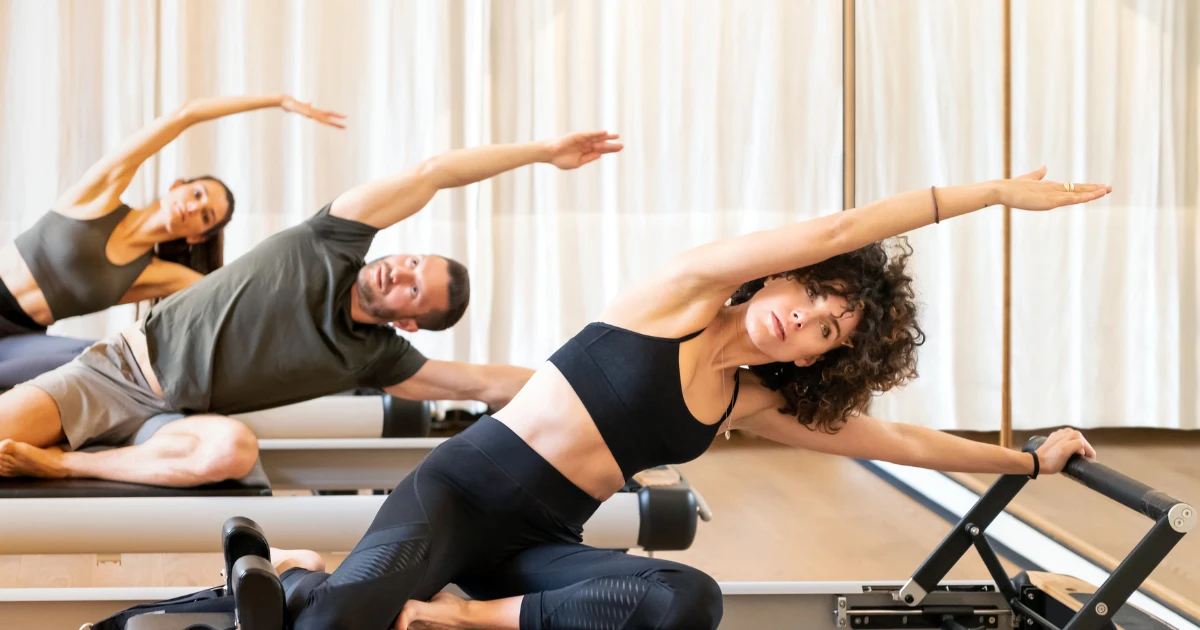
Clinical Pilates is a targeted exercise program prescribed and supervised by a physiotherapist or accredited exercise physiologist, built around a clinical assessment of your movement, pain and goals — unlike a standard reformer class, which runs a fixed sequence for a mixed-ability group. It is backed by peer-reviewed research, including a Cochrane review on chronic low back pain, and sessions are often partly claimable through private health insurance extras.
If you've ever browsed a local studio schedule or chatted with a physio after an injury, you've probably heard the term "Clinical Pilates" thrown around. But what actually makes it "clinical" — and how is it different from the high-energy reformer class your friend goes to on Saturday mornings?
Whether you're recovering from an injury, managing back pain, or trying to figure out if you can claim your sessions on private health insurance, here's everything you need to know.
What Is Clinical Pilates?
At its core, Clinical Pilates is a targeted exercise program prescribed and supervised by a registered health professional — typically a physiotherapist or accredited exercise physiologist. Unlike general fitness classes designed for a crowd, Clinical Pilates starts with a detailed physical assessment. Your practitioner evaluates your movement patterns, joint mobility and pain triggers to build a customised program centred on your specific injury, rehabilitation goal or medical condition.
Clinical Pilates vs Standard Reformer: How Do They Compare?
Both styles use equipment like reformers, trapeze tables (Cadillacs) and Wunda chairs, but the intent and execution are fundamentally different — if you're new to the reformer specifically, our what is reformer Pilates guide covers the standard-class side of this comparison.
| Feature | Clinical Pilates / physio-led | Standard / fitness reformer |
|---|---|---|
| Primary goal | Injury rehabilitation, pain management & movement retraining | General strength, cardiovascular fitness & toning |
| Session leader | Registered physiotherapist or exercise physiologist | Certified Pilates / group fitness instructor |
| Assessment | Comprehensive 1-on-1 clinical examination before starting | Usually a brief intake form or general orientation |
| Class size | 1-on-1 or micro-groups (typically 1:1 to 1:4) | Medium to large groups (often 10–20+) |
| Program | Custom exercise sequence, updated as you recover | Standardised group sequence set by the instructor |
| Health rebates | Eligible under private health extras (physio / EP item codes) | Not claimable under private health insurance |
What Does the Science Say?
Clinical Pilates isn't just a wellness trend — it's backed by a growing body of peer-reviewed research.
- Chronic low back pain: a Cochrane systematic review by Yamato et al. found Pilates-based movement produced significant improvements in pain relief and functional capacity compared with minimal intervention.
- Core & lumbopelvic stability: research published in PLOS ONE by Wells et al. shows targeted core stabilisation reduces pain intensity and helps prevent recurring flare-ups by strengthening the deep local stabilising muscles.
- Joint & post-surgical recovery: controlled clinical exercise helps re-establish neuromuscular control after operations such as ACL reconstructions or hip and knee replacements, without placing excessive load on healing tissue.
For a deeper, allied-health-oriented synthesis of the biomechanics behind combining Reformer work with heavier resistance training, see our Hybrid Sculpting Report.
Common Reasons People Start Clinical Pilates
- Spine & musculoskeletal pain: managing chronic lower back pain, sciatica, neck tension or postural syndromes.
- Post-surgical rehabilitation: safely rebuilding strength after joint replacements, spinal surgery or ligament repairs.
- Women's & pelvic health: pre- and post-natal care, including lumbopelvic pain, pelvic floor dysfunction and abdominal separation (diastasis recti).
- Chronic condition management: improving joint stability and balance for conditions like osteoarthritis, hypermobility disorders (e.g. hEDS) or fall prevention.
- Injury prevention for athletes: correcting subtle muscle imbalances to help prevent recurrent hamstring, groin or shoulder injuries.
Is Clinical Pilates Right for You?
As a quick check, Clinical Pilates is generally worth considering if:
- You're dealing with an active injury, chronic pain or joint issue.
- You want a program built around your body's specific limitations.
- You prefer small-group or 1-on-1 attention with immediate feedback.
- You want to claim session costs through your private health insurance extras.
Do I need a doctor’s referral?
Not always, though a referral can help the treating physiotherapist understand your history and may be required for certain health fund claims. If you're managing a specific injury, checking with your GP or physio first is worthwhile regardless.
Can I do clinical Pilates alongside general reformer classes?
Yes, many people do — clinical Pilates addresses a specific issue under professional supervision, while general classes build broader fitness once that issue is managed. Reformer Pilates in Milton is a good example of a suburb with both formats side by side, if you want to compare them directly.
What Is the Difference Between Pilates and Clinical Pilates?
General Pilates — mat or reformer — is taught by a certified Pilates or fitness instructor in a class built for general fitness, flexibility and toning. Clinical Pilates is prescribed and supervised by a physiotherapist or accredited exercise physiologist as part of a treatment plan for a specific injury or condition, and starts with a clinical assessment rather than a standard class format. The exercises can look similar; what sets Clinical Pilates apart is the practitioner's qualification, the assessment behind it, and the medical intent driving the program.
What Is the Difference Between Clinical and Classic Pilates?
"Classic" Pilates refers to the original method developed by Joseph Pilates in the early 20th century — a set sequence of mat and equipment-based exercises taught largely as designed. Clinical Pilates borrows the same equipment and core movement principles, but a physiotherapist or exercise physiologist selects and modifies the exercises based on your clinical assessment rather than following a fixed classical sequence — the goal is your rehabilitation, not adherence to the original method.
Who Needs Clinical Pilates?
It suits anyone managing an injury, chronic pain, a post-surgical recovery, or a condition like osteoarthritis or hypermobility, who wants exercise that's assessed and adjusted by a health professional rather than delivered in a general class (see the common reasons above). It isn't only for injury, either — some people use it preventatively, to correct movement imbalances before they become a problem, particularly athletes and people returning to exercise after a long break. Older adults managing joint conditions may prefer a general seniors-friendly reformer class instead — see our reformer Pilates for seniors guide for how that compares.
Is Clinical Pilates Worth It?
For anyone managing an injury, chronic pain or a condition that needs professional oversight, the evidence above — including a Cochrane review on chronic low back pain — supports it, and the one-on-one or small-group format means the program is genuinely built around you rather than a generic class. It's a different product to a general reformer class, not just a pricier version of one, so it's worth the extra cost specifically for people who need that clinical input; if you have no injury or condition to manage, a standard group class will usually serve you just as well for less.
How Much Is a Clinical Pilates Class?
Clinical Pilates costs noticeably more per session than a general reformer class, because you're paying for a physiotherapist or exercise physiologist's time and a program built around a clinical assessment, not just studio access — and sessions are more often one-on-one or small-group rather than a large open class. Exact pricing varies significantly by clinic, location and session length, and shifts over time, so it's worth confirming the current rate directly with the practice before booking, and asking whether a Medicare or private health rebate applies in your situation.
Is Clinical Pilates Covered by Medicare?
Medicare doesn't cover Pilates as a general fitness activity. But if a registered physiotherapist delivers or directly supervises your session as part of a GP Chronic Condition Management Plan — the Medicare pathway for a diagnosed chronic condition, which replaced the older GP Management Plan and Team Care Arrangements from 1 July 2025 as part of MyMedicare — it can be billed as a physiotherapy service and attract a partial Medicare rebate. That plan covers up to five allied health services per calendar year in total, shared across all disciplines rather than five Pilates sessions specifically, at a rebate that Medicare re-indexes each year, so check the current amount with Medicare or your GP rather than assuming last year's figure still applies. You'll also need a GP referral and a qualifying chronic condition — generally one that has lasted, or is expected to last, six months or more. Outside Medicare, many people instead claim Clinical Pilates through their private health insurance extras when it's billed as a physiotherapy or exercise physiology service; coverage depends entirely on your fund and policy level, so check directly with your provider.
Sources
- Department of Health & Aged Care — Private Health Insurance Natural Therapies Reform Fact Sheet
- Yamato et al. — Pilates for Low Back Pain (Cochrane systematic review)
- Wells et al., PLOS ONE — The Effectiveness of Pilates Exercise in People with Chronic Low Back Pain
- Australian Physiotherapy Association — official professional body information
- Services Australia — GP Chronic Condition Management Plans and Team Care Arrangements