Guide
Pilates vs Yoga: Which Should You Choose?
Updated 25 July 2026
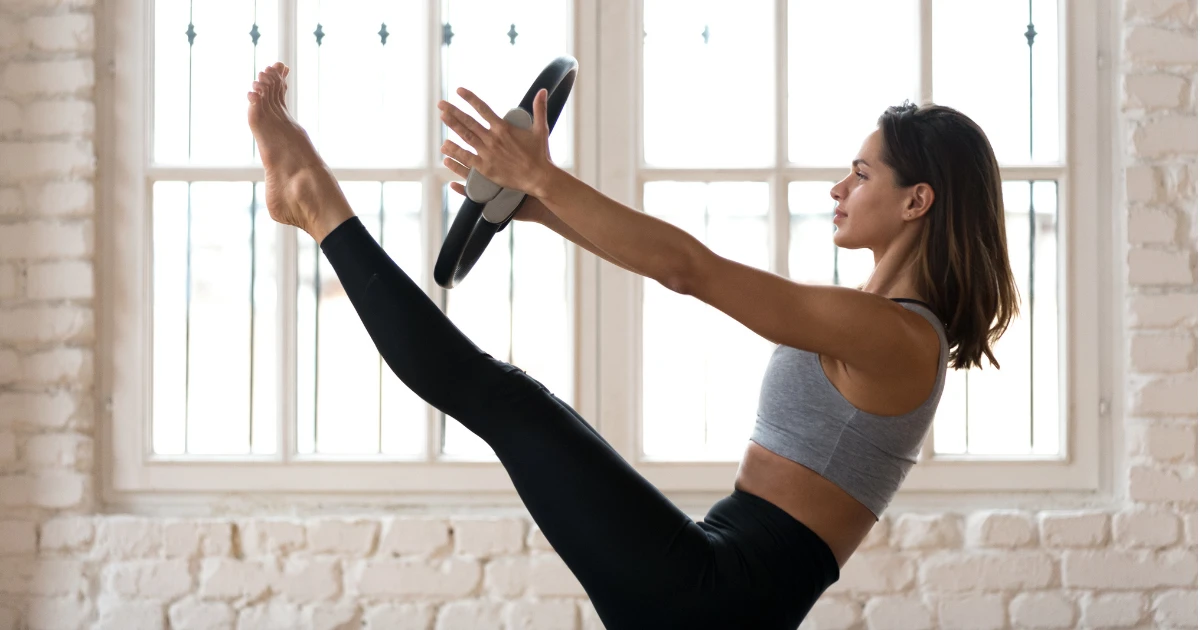
Pilates is a structured, precision-focused conditioning method built around core stability and controlled resistance, while yoga is a broader mind-body practice built around flowing or held postures, breath control and flexibility. Pilates tends to have the stronger evidence base for core strength and low back pain specifically, while yoga has the stronger evidence base for flexibility and stress reduction — many people get the most out of doing both rather than choosing permanently.
At first glance, Pilates and yoga share a lot of common ground. Both are low-impact, mat-based practices that emphasise controlled breathing and build real body awareness.
Step into a class for each, though, and the underlying philosophies, movement mechanics and evidence base behind them are genuinely different. Whether your priority is core strength, easing lower back pain, improving flexibility or reducing stress, this guide breaks down how the two actually compare.
At-a-Glance Comparison
| Feature | Pilates (Mat & Reformer) | Yoga (Vinyasa, Hatha, Yin) |
|---|---|---|
| Origins | Developed by Joseph Pilates in the 1920s for physical rehabilitation | An Indian spiritual and physical discipline going back thousands of years |
| Primary focus | Deep core stability, spinal alignment, muscle control | Full-body flexibility, balance, breathwork and mindfulness |
| Movement style | Repetitive, precise, controlled structural movements | Flowing sequences (vinyasa) or held static poses (asanas) |
| Breathing technique | Lateral thoracic breathing, exhaling on exertion | Diaphragmatic breathing, often with nasal breath control (e.g. Ujjayi) |
| Equipment | Floor mat, or a reformer, Cadillac or Wunda chair for resistance | Floor mat, and often blocks, straps or bolsters |
| Mind-body integration | Physical focus, with high concentration on movement quality | Broader integration of body, mind and stress reduction |
The Philosophies: Modern Conditioning vs Ancient Practice
Understanding where each practice came from goes a long way toward explaining why their classes feel so different.
Yoga: an ancient mind-body tradition
Yoga originated in India thousands of years ago as a holistic physical, mental and spiritual discipline. Physical postures (asanas) are just one branch of a much broader system built to align the body, quiet the mind and connect breath (pranayama) with movement.
Pilates: 20th-century movement rehabilitation
Pilates was developed in the early 20th century by Joseph Pilates, a German-born trainer. He originally called it "Contrology," and — according to a widely repeated account — first developed the concept while interned on the Isle of Man during the First World War, attaching springs to hospital beds so fellow internees could exercise while bedridden. Historians note there's no direct documented proof of that specific hospital work, but the method that followed focused squarely on precise biomechanics, strengthening stabilising muscles and restoring neutral spinal alignment — a clear break from yoga's broader mind-body tradition.
Core Biomechanics: How Muscle Activation Differs
Both practices use body weight, but they load muscles in different ways, which is a big part of why they produce different physical adaptations.
Progressive resistance vs static holds
Pilates, especially on a reformer, uses progressive resistance through steel springs — muscles contract under varying tension through concentric and eccentric movement, building muscular endurance without high joint impact. Yoga instead relies mainly on isometric holds — holding a pose like Warrior II or plank against gravity — which builds isometric muscular stamina and challenges joint stability in a different way.
The “powerhouse” vs distributed engagement
In Pilates, nearly every exercise is initiated from the "powerhouse" — the transversus abdominis, multifidus, pelvic floor and diaphragm working together — with the core constantly recruited to stabilise the spine while the limbs move. In yoga, core strength is engaged throughout poses and inversions too, but it's distributed alongside hip opening, shoulder flexibility and spinal rotation rather than being the central organising focus of every movement.
Strength, Flexibility and Calorie Burn
Flexibility
Yoga tends to have the edge on end-range mobility — poses take joints through deep flexion, extension and lateral stretches, and styles like Yin yoga hold stretches for several minutes at a time specifically to target fascia and connective tissue. Pilates instead builds dynamic flexibility, stretching muscles while they're contracting, which improves active functional range of motion rather than passive flexibility.
Muscular strength and toning
Pilates tends to have the edge on targeted, progressive core load — equipment like the reformer lets you keep increasing resistance as you get stronger in a way body-weight yoga generally can't match. Yoga's strength benefit varies a lot by style: gentle Hatha yoga provides fairly mild strength gains, while a fast-paced Vinyasa or Power Yoga class builds real upper-body and leg endurance through continuous body-weight transitions.
You'll often see calorie-burn figures quoted for both — a vigorous Vinyasa class and an athletic reformer session are commonly estimated in similar ranges per hour. Treat any specific number with real caution, though: it depends far more on class intensity, instructor pacing and your own effort than on the format itself, and there's no well-controlled study pinning an exact figure to either.
Clinical Applications: Injuries, Back Pain and Stress
Low back pain and rehabilitation
Pilates has real evidence behind it here — a Cochrane systematic review found Pilates-based exercise reduces pain and functional disability in people with chronic low back pain, and physiotherapists frequently prescribe it because spring resistance can be wound right down to support an injured joint.
Mental health, stress and sleep
Yoga's evidence base is strongest around stress and mental wellbeing — research links yoga's combination of slow diaphragmatic breathing and meditative focus to measurable reductions in stress markers, and a number of trials report improved sleep and reduced anxiety symptoms. It's worth noting the research quality varies a lot between studies, and reviewers generally call for larger, more rigorous trials rather than treating the case as fully settled — but the overall direction of the evidence is consistently positive.
Which Should You Choose?
Choose Pilates if you:
- Want to build core strength, correct posture or address abdominal weakness
- Are recovering from an acute joint or spinal injury under an allied health professional's guidance
- Prefer structured, precise, equipment-assisted resistance work — see our reformer vs mat Pilates guide for how to pick a starting format
Choose yoga if you:
- Want to improve overall flexibility, hip opening and joint mobility
- Want a strong mindfulness, stress-relief or meditative component in your workout
- Enjoy flowing, breath-led, meditative floor-based practice
Doing both in the same weekly routine builds a genuinely well-rounded foundation — Pilates provides the core stability and alignment that helps you hold more complex yoga poses safely, without straining your lower back. If it's the music-driven, muscle-toning side of low-impact training you're after rather than yoga specifically, our barre vs Pilates guide is worth a look too.
Can I do Pilates and yoga together?
Yes, and many people find the two complement each other well within the same week or even the same day. If you're doing both in one session, most people do Pilates first to activate the deep core and stabilising muscles, then follow with yoga to stretch out tight fascia and lower the heart rate before finishing.
Which is gentler on sensitive joints?
Both are generally low-impact, though reformer Pilates offers more adjustability for acute joint pain since the spring tension can support your body weight. In yoga, gentler styles like restorative or chair yoga are the better choice for joint stiffness rather than a dynamic Vinyasa class.
Which burns more calories?
A dynamic Vinyasa or Power Yoga class and an athletic reformer Pilates class can both land in a broadly similar range per hour, but caloric expenditure depends far more on class intensity and personal effort than on the format itself — treat any specific number quoted for either as a rough estimate, not a guarantee.
Sources
- Yamato et al. — Pilates for Low Back Pain (Cochrane systematic review)
- Healthdirect Australia — Health Benefits of Yoga and Pilates
- BMC Sports Science, Medicine and Rehabilitation — Effects of Pilates Exercises on Spine Deformities and Posture: A Systematic Review