Guide
Reformer Pilates vs Mat Pilates: Which Is Best for Your Goals?
Updated 19 August 2026
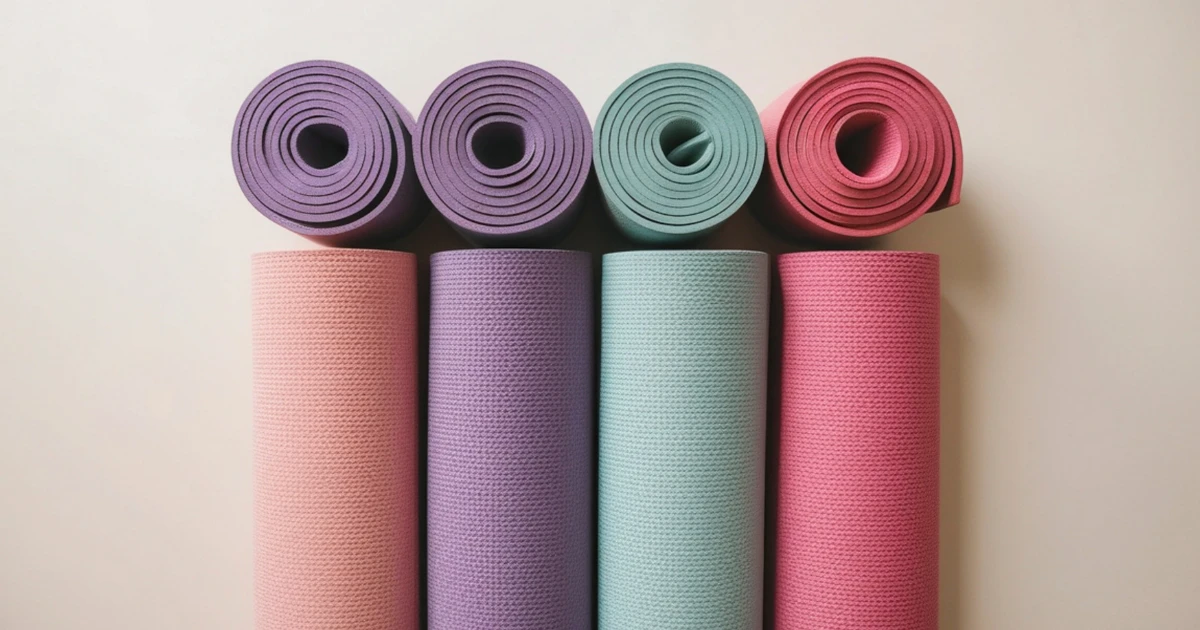
Reformer Pilates uses a spring-loaded sliding carriage that gives adjustable resistance and machine-guided support, while mat Pilates relies on your own body weight and gravity for a lower-cost, highly portable workout. Reformer tends to offer more exercise variety and joint support; mat builds pure core control without any equipment — many people get the most out of doing both.
The short answer: reformer Pilates uses a spring-loaded sliding carriage for adjustable, machine-guided resistance, while mat Pilates uses only your own body weight — cheaper, more portable, and a purer test of your own core control. Neither is objectively "better"; they suit different goals, budgets and starting points, and plenty of people do both. The breakdown below covers the mechanics, the real cost difference, and how to decide — then browse real studios if you're ready to try either.
How Do Reformer and Mat Pilates Compare at a Glance?
| Feature | Mat Pilates | Reformer Pilates |
|---|---|---|
| Equipment | Just a mat, plus optional small props (ring, band, roller) | A sliding carriage on adjustable steel springs, straps and a footbar |
| Intensity | Set entirely by your own effort and control — no machine assistance | Adjustable via spring tension, from beginner-supportive to advanced |
| Exercise variety | Floor and standing bodyweight variations | Hundreds of variations across different spring loads and positions |
| Typical cost | Usually lower per class than reformer | $28–$50 for a casual class in Brisbane — see our full pricing guide |
| Accessibility | High — practise anywhere, at home or in a studio | Studio-based, since it needs the equipment |
| Best for | Core control, home workouts, budget flexibility | Targeted strength, joint rehab, guided alignment |
Which Type Is Right for You?
| If you want… | Try… | Why |
|---|---|---|
| A low-cost, highly accessible routine you can do anywhere | Mat Pilates | No equipment needed, so it's the cheapest way in and works at home or on the road. Our mat Pilates for beginners guide covers what a first class looks like. |
| To master foundational core control without relying on machine support | Mat Pilates | With no straps or springs to help hold your body weight, you build stability using nothing but your own abdominal wall. |
| Targeted strength work with guided feedback, or recovery from a joint/back issue | Reformer Pilates | Adjustable spring resistance and the carriage's physical feedback reduce impact on the hips, knees and ankles, which is why it's widely used for injury rehab. See our reformer Pilates for beginners guide for what to expect. |
| Dynamic, varied workouts with a lot of exercise variety | Reformer Pilates | The carriage, straps, long box and jump board allow for hundreds of variations that a mat alone can't replicate. |
| The best of both | Both, on rotation | Many people find mat builds the internal control that makes reformer sessions more effective, while reformer adds machine-resisted strength and joint support mat can't provide alone. |
How Does Each Format Actually Work?
Mat Pilates
Mat Pilates is performed on a cushioned floor mat. Rather than using machinery, you rely on your own body weight working against gravity. Instructors often bring in small props — a Pilates ring, resistance band, foam roller or light weights — to isolate specific muscle groups.
Reformer Pilates
Reformer Pilates takes place on a bed-like frame with a flat sliding platform, the carriage. The carriage is attached to the frame by a set of springs offering varying tension, and you push or pull it using footbars, hand straps and ropes, in lying, sitting, kneeling or standing positions.
Why Do Reformer and Mat Pilates Feel So Different?
Understanding the mechanics behind each format helps explain why they feel so different.
The Counter-Intuitive Spring Tension
In weightlifting, heavier generally means harder. On a reformer, lighter spring settings can actually be more challenging for core stability, because the carriage becomes less stable and forces deep stabiliser muscles — like the transversus abdominis — to work harder to control it. Heavier springs, by contrast, add resistance for larger muscle groups such as the glutes and quads, or support your body weight during lunges and planks.
Machine Feedback vs Form Discipline
Because the reformer's straps, ropes and fixed carriage track give constant physical feedback, your nervous system gets a clearer sense of where your body is in space as you move. In mat Pilates, there's no apparatus to catch you if your pelvis tilts or your spine misaligns — maintaining good form relies entirely on your own body awareness and discipline.
What Are the Pros and Cons of Each Format?
Mat Pilates
Pros:
- Budget-friendly and accessible: lower cost per class, and easy to practise at home or while travelling.
- Builds pure core control: teaches you to stabilise your spine using nothing but your own abdominal wall.
- Low impact: gentle on the joints while still building muscular endurance.
Cons:
- Harder for beginners to self-correct: without straps or machine feedback, it's easy to compensate with the wrong muscles if unsupervised.
- Limited progressive overload: harder to keep adding load if building maximum strength is the goal.
Reformer Pilates
Pros:
- Versatile progressive overload: resistance dials up or down to suit complete beginners or advanced exercisers.
- Strong joint support: reduces impact on the hips, knees and ankles, making it a well-evidenced option for injury rehabilitation.
- Endless variety: the carriage, straps, long box and jump board allow for hundreds of exercise variations.
Cons:
- Higher cost: the equipment and smaller class sizes make reformer classes more expensive than mat — see our Brisbane pricing guide for real ranges.
- An initial learning curve: the straps, springs and carriage setup can feel unfamiliar in your first session.
Is Reformer Pilates Harder Than Mat Pilates?
Not necessarily. Mat Pilates can feel harder for some people, since you get no assistance from straps or springs to help hold your body weight. Reformer Pilates lets you adjust spring tension to make a movement either easier or more challenging.
Can Beginners Start Straight on a Reformer?
Yes — most boutique studios design introductory reformer classes specifically for first-timers. The springs can be adjusted to support your body weight, which makes many movements safer and easier to perform correctly than the equivalent on a mat.
Can I Lose Weight or Build Muscle With Mat Pilates Alone?
Yes. Mat Pilates builds lean muscular endurance, improves posture and strengthens the deep core muscles. It's low-impact and burns fewer calories than high-intensity cardio, but paired with a balanced diet it supports healthy body composition over time.
Sources & Further Reading
- Yamato et al. — Pilates for Low Back Pain (Cochrane systematic review)
- Wells et al., PLOS ONE — The Effectiveness of Pilates Exercise in People with Chronic Low Back Pain
- Healthline — Reformer vs Mat Pilates: Pros, Cons and Comparison (further reading)