Guide
Mat Pilates for Beginners: What to Expect in Your First Class
Updated 25 July 2026
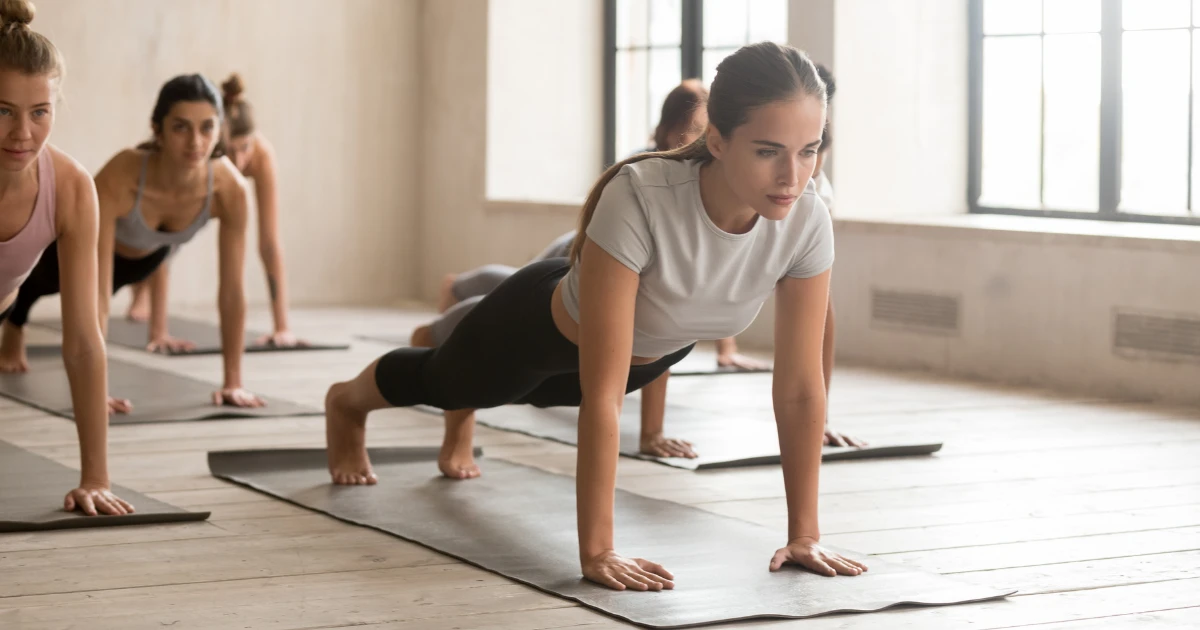
A beginner mat Pilates class uses only your body weight and gravity, so there’s no machine to learn — just a mat, controlled breathing, and a sequence of floor and standing exercises that build core strength and spinal control. Expect an instructor to walk you through form carefully in your first class, since mat work relies entirely on your own alignment rather than a machine guiding the movement.
Mat Pilates is the original version of the method Joseph Pilates developed — no springs, no carriage, just your body weight, gravity, and a sequence of controlled, precise movements. It's more accessible than a reformer class in one sense (nothing to book, no equipment to learn), but that also means your own form and control matter even more.
Here's what to bring, what actually happens in a beginner class, the movements you'll practise, and how it differs from reformer if you're deciding between the two.
What You Actually Need to Bring
Mat Pilates has the lowest gear barrier of any class type on a studio timetable.
- A mat (most studios provide one, but bring your own if you prefer)
- Fitted, breathable activewear
- Bare feet or grip socks
- A small towel
- A water bottle
Because there's no machine to size up or spring to adjust, there's no real need to arrive early for an equipment orientation the way you would for a first reformer class — a few minutes early to grab a spot and settle in is enough.
What Happens in a Beginner Mat Class
A typical class runs about 45 to 60 minutes and moves through a fairly consistent structure:
- Breathing & centring: lying on your back, establishing neutral spine and pelvis position and the lateral breathing pattern used throughout the class.
- Core activation series: foundational abdominal work — curls, pelvic tilts and leg slides — done slowly to build the control the rest of the class relies on.
- Full-body sequence: a mix of floor and standing exercises working the core, glutes, back and shoulders through a full range of motion.
- Stretch & cool down: spinal articulation and stretching work to close out the session.
Common Beginner Movements You’ll Practise
- The Hundred — lying on your back with head and shoulders lifted, pumping your arms while holding a stable core; a classic Pilates warm-up.
- Pelvic curl (bridging) — lifting the hips off the mat one vertebra at a time to build spinal control and glute strength.
- Roll-up (or modified roll-down) — articulating through the spine to sit up from lying flat, usually modified for beginners until core strength builds.
- Bird dog — on all fours, extending opposite arm and leg while keeping the spine still, for core and balance control.
- Cat-cow — a gentle spinal mobility sequence moving between rounding and arching the back on all fours.
How Mat Pilates Differs from Reformer
Without a machine to add or remove resistance, mat Pilates relies entirely on gravity and your own body weight, which makes form and control more important than in a reformer class — there's no spring to help support a movement you're not quite ready for. It's also the more portable option, since a mat class translates directly to home practice in a way a reformer class doesn't. See our full reformer vs mat Pilates comparison if you're deciding between the two.
Post-Class Expectations: Soreness & Frequency
Expect mild soreness through the deep abdominals, glutes and lower back one to two days after your first class, similar to starting any new strength activity — it typically settles within a few sessions as your body adapts to the movement patterns.
One to two classes a week is a reasonable starting point for building core strength and control; because mat work needs no equipment, it's also one of the easiest formats to supplement with short home sessions between studio classes.
Do I need to be flexible to start mat Pilates?
No. Every exercise can be modified — a smaller range of motion, a supported variation, or a slower tempo — so you build flexibility and control over time rather than needing them on day one.
Can I do mat Pilates at home after class?
Yes, and many people do — it's one of mat Pilates' main advantages over reformer. Once an instructor has checked your form on the core movements in a studio setting, short home sessions are a reasonable way to build consistency between classes.
Is mat Pilates enough exercise on its own?
It builds real core strength, postural control and flexibility, but it's low-impact and doesn't raise your heart rate the way cardio does, so most people pair it with some form of cardiovascular activity for general fitness rather than relying on it alone. If you're weighing it up against another mat-based, low-impact format, our Pilates vs yoga guide covers how the two compare.
Sources
- Healthline — Pilates for Beginners: A Workout and Complete Guide
- Better Health Channel — Pilates – Health Benefits
- Peloton, The Output — Mat Pilates Benefits, Beginner Moves, and Getting Started